
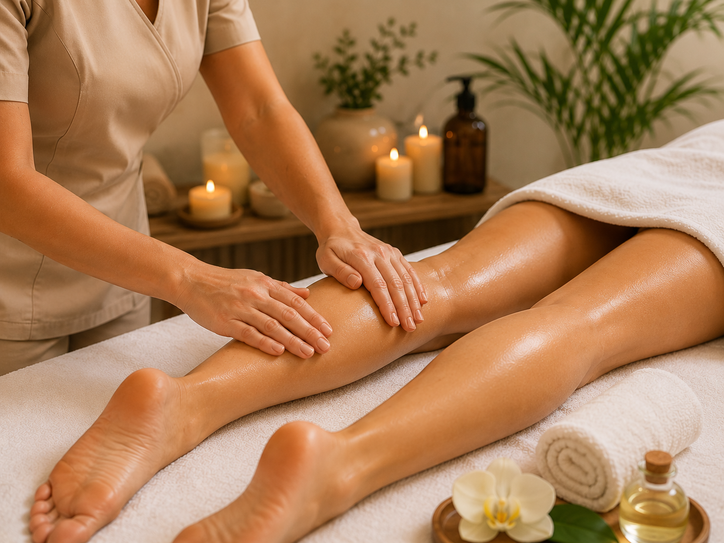
Swelling can make the body feel heavy, tight, uncomfortable or noticeably different from one day to the next. The causes of swelling are not always the same, which is why understanding what is behind it matters before choosing a treatment.
Lymphatic drainage massage is one technique used to encourage the movement of lymph fluid and, in appropriate situations, help reduce swelling. It is particularly established as part of care for lymphedema, where lymph fluid builds up in tissues because the lymphatic system is not functioning normally.
For people considering lymphatic drainage as an aesthetic or wellness treatment, however, it is important to understand what the technique can realistically do, what “fluid retention” means, and when swelling should be evaluated by a healthcare professional.
Swelling occurs when fluid accumulates in body tissues.
There are many possible reasons for this accumulation. Some types of swelling are related to the lymphatic system, while others have different causes and therefore require a different approach.
One example is lymphedema, which occurs when lymph fluid builds up in tissues because lymphatic vessels or lymph nodes are damaged, blocked or otherwise unable to drain fluid normally. Cancer or cancer treatments such as surgery and radiotherapy can cause this type of lymphatic dysfunction.
This distinction is important because not every swollen leg, arm, abdomen or face is caused by lymphatic congestion.
If swelling is new, persistent, worsening or unexplained, it should not simply be assumed to be “fluid retention.”
“Fluid retention” is a broad term commonly used to describe excess fluid accumulating in the body’s tissues.
From a medical perspective, the reason for the fluid buildup matters. Lymphatic dysfunction is one possible cause, but it is not the only one.
For someone seeking an aesthetic treatment, temporary puffiness can feel very different from clinically diagnosed lymphedema. The appropriate response also depends on what is causing the swelling.
That is why lymphatic drainage should not be promoted as a universal solution for every form of fluid retention.
Manual lymphatic drainage, or MLD, is a specialized massage technique designed to encourage lymph fluid to move from a congested or swollen area toward parts of the lymphatic system that are functioning normally.
Cancer Research UK describes the objective of MLD as moving fluid away from a swollen area into an area where the lymphatic system can drain it normally.
The NHS similarly describes manual lymphatic drainage as a specialized massage used within decongestive lymphatic therapy to stimulate lymph flow and reduce swelling associated with lymphoedema.
The technique is therefore more specific than simply massaging a swollen body part.
The therapist works according to the pathways of the lymphatic system rather than applying pressure randomly over the area.
Lymphatic drainage is different from many forms of body massage because it does not depend on deep pressure.
Manual lymphatic drainage works primarily with the superficial lymphatic system. The movements are gentle and controlled, with the therapist using the skin and superficial tissues to encourage fluid movement.
Cancer Research UK describes MLD as a specialized type of skin massage and notes that different recognized techniques use somewhat different movement patterns.
This is one reason why someone receiving lymphatic drainage may be surprised by how light the treatment feels compared with a deep-tissue massage.
More pressure does not necessarily mean better lymphatic drainage.
In the right circumstances, yes.
Manual lymphatic drainage is used clinically to help manage swelling associated with lymphedema. The NHS includes MLD as one component of decongestive lymphatic therapy, alongside compression, exercise and skin care.
Mayo Clinic also describes manual lymph drainage as a light massage technique that can help move trapped fluid toward areas with functioning lymph vessels in people with lymphedema.
However, the response is not identical for everyone.
Cleveland Clinic notes that lymphatic massage may not produce meaningful results in people who do not have lymphedema.
This is an important distinction when discussing lymphatic drainage in an aesthetic setting: a temporary change in puffiness should not be presented as proof that a medical lymphatic disorder was present.
At Flavia Leme Studio, lymphatic drainage is offered as a gentle aesthetic and wellness treatment in a professional spa environment.
The treatment is performed using controlled, rhythmic movements rather than aggressive pressure, with attention to the client’s comfort throughout the session.
If your concern is temporary puffiness, a feeling of fluid retention or general discomfort associated with swelling, lymphatic drainage may be an option worth discussing.
However, persistent, sudden or unexplained swelling should be medically evaluated before beginning a massage treatment.
Explore our Lymphatic Drainage service to learn more about the treatment and determine whether it fits your aesthetic and wellness goals.
It can help encourage lymph fluid movement and may reduce certain types of swelling. Its clinical use is particularly established in the management of lymphedema. Not all fluid retention is caused by lymphatic dysfunction.
There is no guaranteed timeline. Results depend on the underlying cause of the swelling and the individual's response. Cleveland Clinic notes that improvement may not be immediate.
It depends on why the legs are swollen. Lymphatic drainage may be appropriate in certain cases, but sudden or unexplained swelling should first be evaluated by a healthcare professional.
The phrase “water retention” can refer to several different situations. Lymphatic drainage specifically works with lymph fluid movement, so it should not automatically be considered a treatment for every form of generalized fluid retention.
No. Lymphatic drainage does not remove body fat. A temporary reduction in swelling can change measurements or appearance, but this is not equivalent to fat loss.